Just, yet and already
Angleščina · 9. razred
Today, we're learning about 'just,' 'yet,' and 'already.' These important words are often used with the Present Perfect tense. They help us talk about when actions happened or if they have happened.
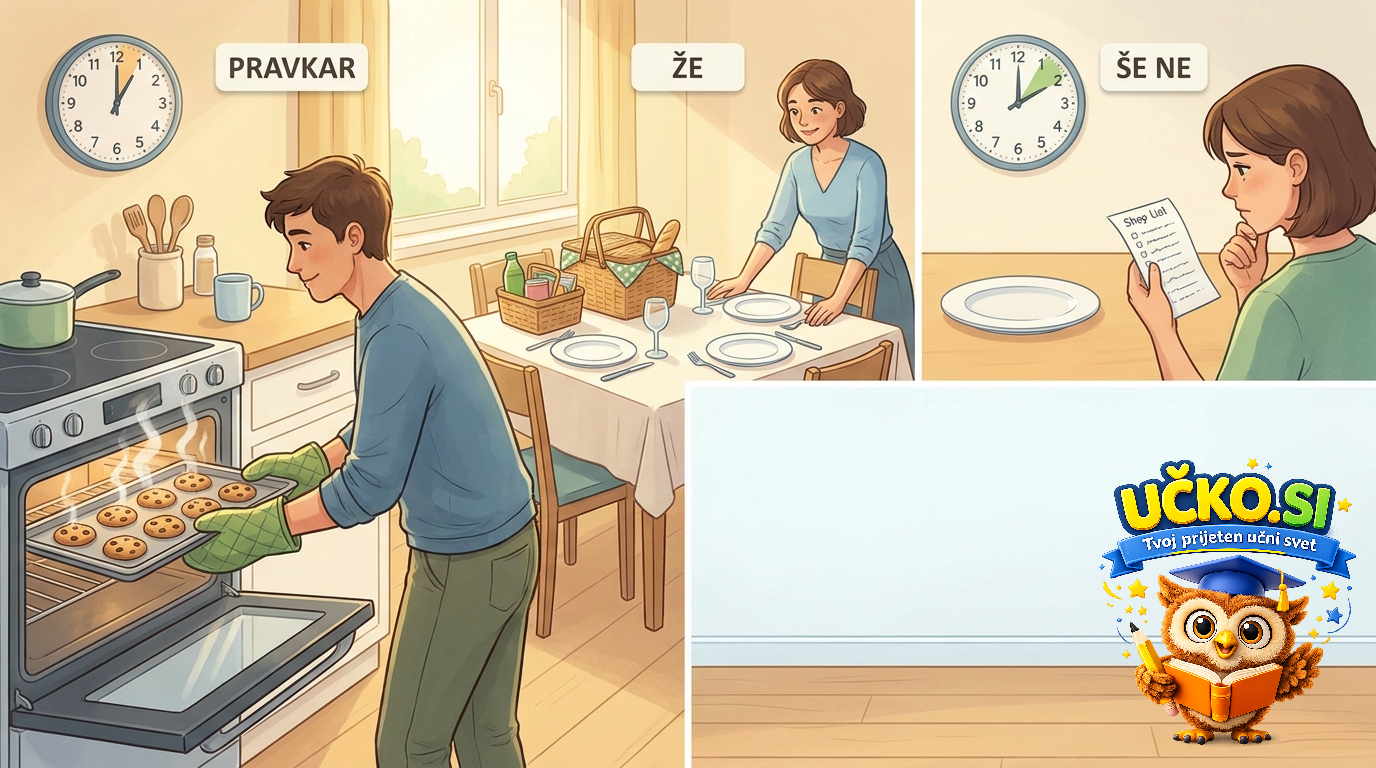
Ključni pojmi
- Just
- A very short time ago (ravno, pravkar).
- Already
- Sooner than expected, or happened before now (že).
- Yet
- Not until now (in negatives) or asking if something has happened (in questions) (še, že).
- Present Perfect
- A verb tense used with 'just,' 'yet,' and 'already'.
Understanding 'Just'
'Just' means a very short time ago, telling us something happened very recently. It goes between 'have/has' and the past participle of the verb. For example, 'I have just finished my homework' means you finished it a few minutes ago.
- 'Just' means a very short time ago.
- It goes between 'have/has' and the past participle.
Using 'Already'
'Already' means something happened sooner than expected or has happened before now. It usually goes between 'have/has' and the past participle. For instance, 'I have already seen that movie' means you don't need to see it again.
- 'Already' means something happened sooner than expected.
- It usually goes between 'have/has' and the past participle, or at the end of the sentence.
When to Use 'Yet'
'Yet' is for things we expect to happen but haven't, and is mostly used in negative sentences and questions. In negative sentences, it means 'not until now,' like 'I haven't finished my homework yet.' In questions, it asks if something has happened, for example, 'Have you finished your homework yet?' 'Yet' usually goes at the end of the sentence.
- 'Yet' is for things not yet happened (negatives) or to ask if they happened (questions).
- It mostly goes at the end of the sentence.
Zanimivosti
- 'Just' is always for recent actions.
- 'Already' is for actions that happened sooner than expected or are completed.
- 'Yet' is for actions that haven't happened or to ask if they have happened.
Povzetek
These words make your English sound more natural and precise. Remember, 'just' is for recent actions, 'already' for completed or early actions, and 'yet' for uncompleted actions or questions.
Pogosta vprašanja
Kaj se naučimo pri temi Just, yet and already?
Today, we're learning about 'just,' 'yet,' and 'already.' These important words are often used with the Present Perfect tense. They help us talk about when actions happened or if they have happened.
Kaj je just?
A very short time ago (ravno, pravkar).
Kaj je already?
Sooner than expected, or happened before now (že).
Kaj je yet?
Not until now (in negatives) or asking if something has happened (in questions) (še, že).
Kako na kratko povzamemo temo Just, yet and already?
These words make your English sound more natural and precise. Remember, 'just' is for recent actions, 'already' for completed or early actions, and 'yet' for uncompleted actions or questions.
Kje najdem vaje in vprašanja za temo Just, yet and already?
Za temo Just, yet and already (Angleščina, 9. razred) so v aplikaciji Učko.si kviz z vprašanji in odgovori ter vaje za preverjanje znanja.
Sorodne razlage – Angleščina, 9. razred
- Listening for specific information
- Listening for the information you need
- Listening skills
- Modal verbs
- Much/many
- Narrative tenses
- Navigating web pages
- Past continuous
- Past perfect
- Past simple
- Predicting what you will hear
- Present continuous