past simple of the verb be (was, were)
Angleščina · 6. razred
Today we're learning about the Past Simple of the verb 'to be'. This helps us talk about things that happened and finished in the past. It's an important verb in English!
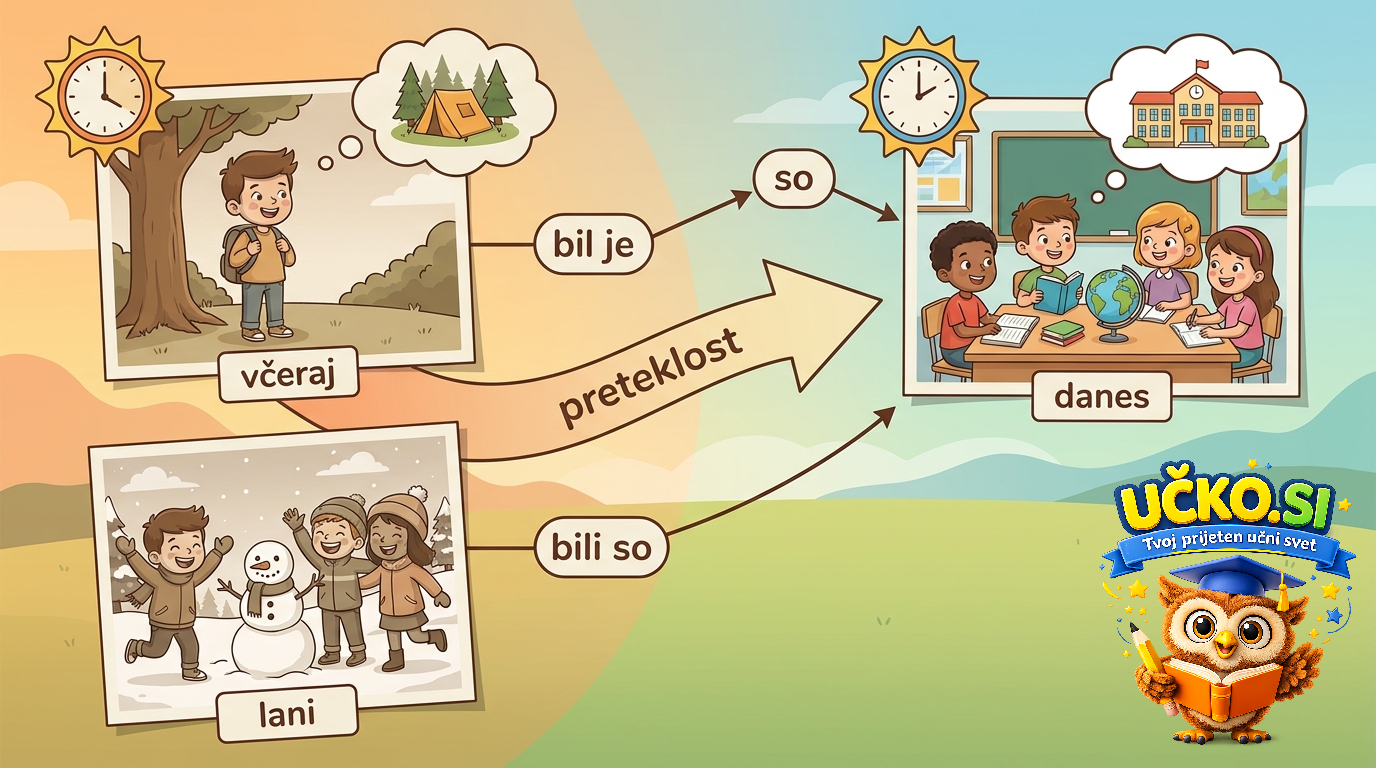
Ključni pojmi
- Past Simple
- Tells us about actions or situations that happened in the past and are now finished.
- Was
- Past form of 'to be' for singular subjects and 'I'.
- Were
- Past form of 'to be' for plural subjects and 'you'.
- Singular
- Meaning one person or one thing.
- Plural
- Meaning more than one person or thing.
What is 'Was'?
We use 'was' for singular subjects, meaning one person or one thing. It's also used with the pronoun 'I'. For example, 'I was at home yesterday' or 'He was tired after school'. 'She was a good student' and 'It was a sunny day' also use 'was'.
- Use 'was' for 'I', 'he', 'she', 'it'.
- Use 'was' for singular nouns (e.g., 'the boy').
What is 'Were'?
We use 'were' for plural subjects, which means more than one person or thing. Importantly, 'you' always uses 'were', even if it's just one person. Examples include 'You were very polite' and 'We were at the cinema'. 'They were happy' and 'The students were in the classroom' also use 'were'.
- Use 'were' for 'you', 'we', 'they'.
- Use 'were' for plural nouns (e.g., 'the students').
Time Words for the Past
When we talk about the past, we often use special time words. These words tell us exactly when something happened. Common examples are 'yesterday', 'last night', 'last week', and 'last year'. We can also say 'an hour ago' or 'two days ago', or mention a specific year like 'in 2020'.
- Time words like 'yesterday' show past actions.
- 'Last week' and 'two days ago' are also common past time expressions.
Zanimivosti
- The verb 'to be' is used to talk about who someone is, what something is, where someone or something is, and how someone feels.
- The Past Simple tells us about actions or situations that happened and are now finished.
Povzetek
Remember to use 'was' for 'I', 'he', 'she', 'it', and singular nouns. Use 'were' for 'you', 'we', 'they', and plural nouns. These forms help us talk about the past.
Pogosta vprašanja
Kaj se naučimo pri temi past simple of the verb be (was, were)?
Today we're learning about the Past Simple of the verb 'to be'. This helps us talk about things that happened and finished in the past. It's an important verb in English!
Kaj je past simple?
Tells us about actions or situations that happened in the past and are now finished.
Kaj je was?
Past form of 'to be' for singular subjects and 'I'.
Kaj je were?
Past form of 'to be' for plural subjects and 'you'.
Kako na kratko povzamemo temo past simple of the verb be (was, were)?
Remember to use 'was' for 'I', 'he', 'she', 'it', and singular nouns. Use 'were' for 'you', 'we', 'they', and plural nouns. These forms help us talk about the past.
Sorodne razlage – Angleščina, 6. razred
- plural forms of nouns
- possessive 's
- possessive adjectives
- possessive pronouns
- prepositions used to describe position (in, on, under, next to)
- present continuous – affirmative form
- present continuous – negative form
- present continuous – questions
- present simple – affirmative form
- present simple – negative form
- present simple – wh questions
- present simple – yes/no questions