Special (irregular) plurals
Angleščina · 7. razred
Most English nouns are regular and simply add -s or -es to become plural. However, irregular plurals change their spelling in special ways and must be learned by heart. These words do not follow the standard rules you usually use.
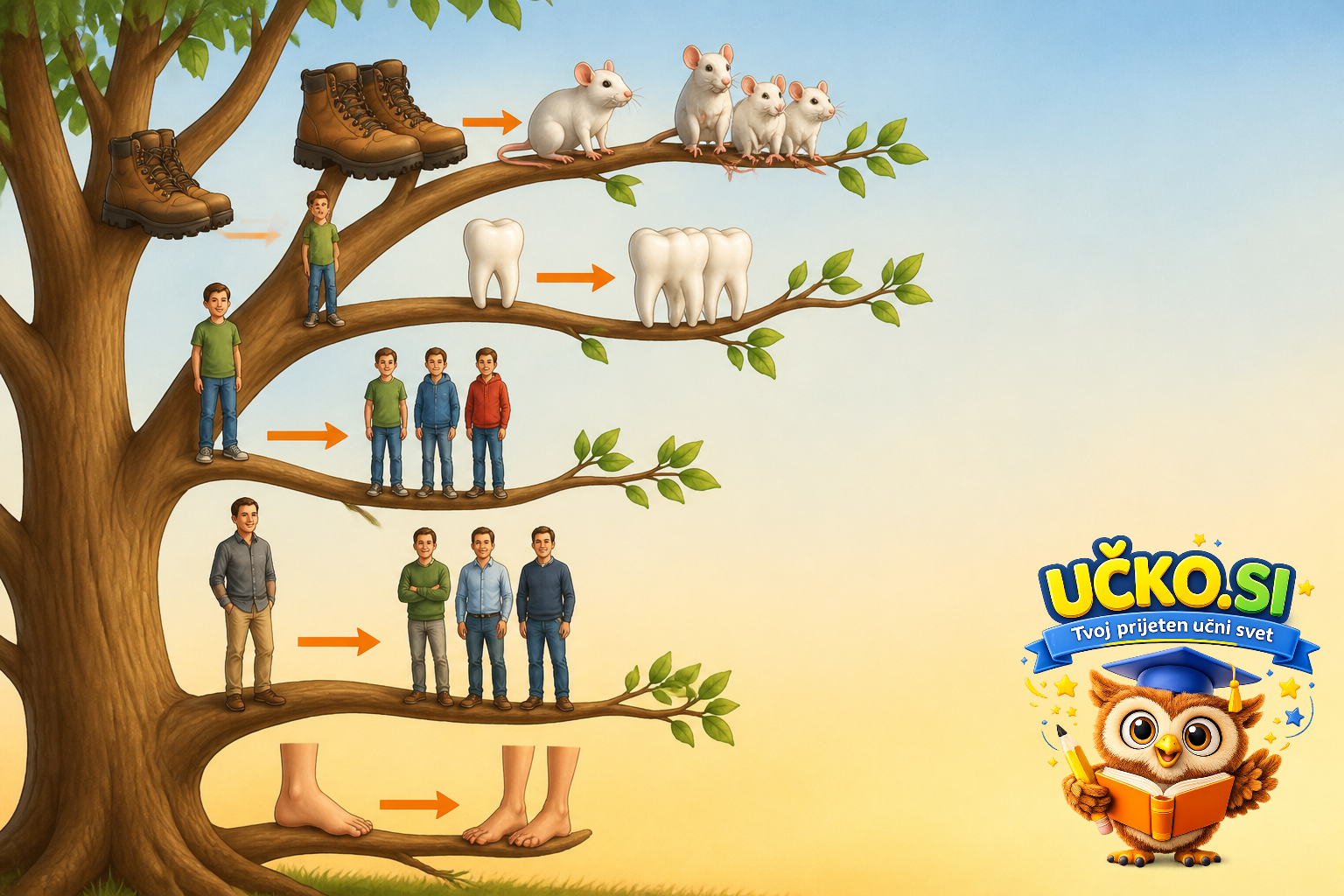
Ključni pojmi
- Irregular plurals
- Nouns that do not follow the standard rule of adding -s or -es.
- Singular
- The form of a word used to describe only one person, animal, or thing.
- Plural
- The form of a word used to describe more than one person, animal, or thing.
- Vowels
- The letters (a, e, i, o, u) that often change inside irregular nouns to make them plural.
Changing Endings and Vowels
When a word ends in -f or -fe, like leaf or knife, we usually change the ending to -ves. Some common words change their middle vowels instead, such as man becoming men or tooth becoming teeth. For example, you brush your teeth before bed and use knives to cut food. These changes help distinguish between one thing and many things.
- Change -f or -fe to -ves (e.g., wolf to wolves)
- Change internal vowels (e.g., foot to feet or mouse to mice)
Unchanging Words and Special Cases
A few nouns, especially certain animals like sheep, fish, and deer, do not change at all in the plural form. Other words have very special changes, such as child becoming children and person becoming people. Additionally, some words ending in -o, like tomato and potato, require -es. You might see ten sheep in a field or many children playing together.
- Some nouns like sheep and fish stay the same in singular and plural
- Words like child and person have unique plural forms
- Add -es to words like tomato, potato, and hero
Zanimivosti
- The word 'sheep' stays exactly the same whether you are talking about one or ten of them.
- To turn one 'mouse' into many, you change the middle to 'mice'.
- Firemen are 'heroes' because they save lives, and their plural name ends in -es.
Povzetek
Irregular plurals do not follow the basic -s rule, so they change their spelling or stay the same. The best way to master these special words is to read them often and practice using them in sentences.
Pogosta vprašanja
Kaj se naučimo pri temi Special (irregular) plurals?
Most English nouns are regular and simply add -s or -es to become plural. However, irregular plurals change their spelling in special ways and must be learned by heart. These words do not follow the standard rules you usually use.
Kaj je irregular plurals?
Nouns that do not follow the standard rule of adding -s or -es.
Kaj je singular?
The form of a word used to describe only one person, animal, or thing.
Kaj je plural?
The form of a word used to describe more than one person, animal, or thing.
Kako na kratko povzamemo temo Special (irregular) plurals?
Irregular plurals do not follow the basic -s rule, so they change their spelling or stay the same. The best way to master these special words is to read them often and practice using them in sentences.
Sorodne razlage – Angleščina, 7. razred
- The article a/an and plural nouns
- The English and the Slovenes: how we are alike and different
- The imperative: orders and instructions
- The possessive case: whose is it?
- THE REAL ME AND MY DREAMS
- The suitcase is packed: going abroad
- The verb can: all the things I can do
- The verb have to: what needs to be done
- The verb must: things I have to do
- The verb should: a piece of good advice
- The verbs be and have got in action
- There is / there are: what is where