planning free time and daily activities
Angleščina · 8. razred
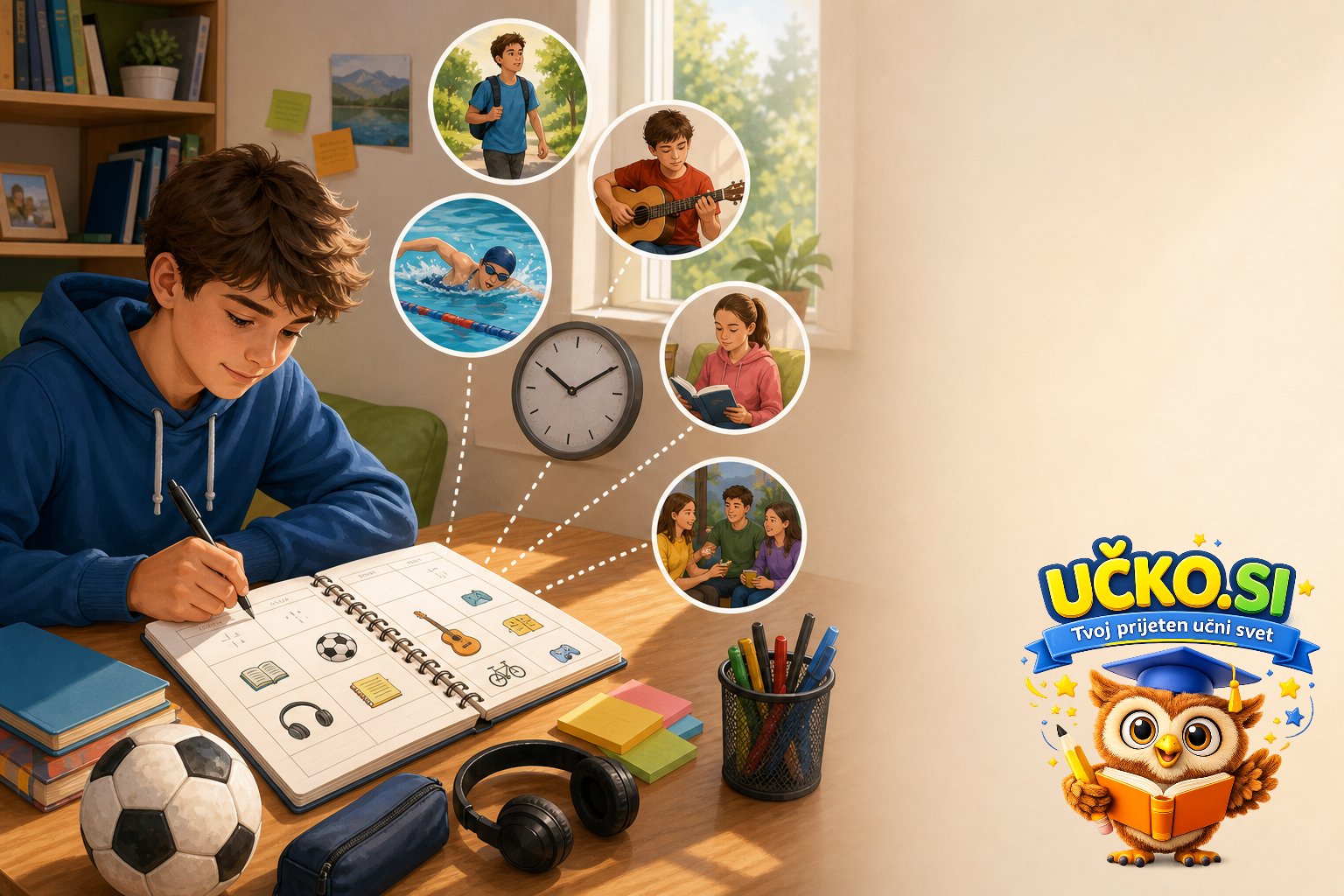
Today, we'll learn to talk about plans for free time and daily activities in English. This helps you organize your life and share your plans with friends. We'll cover routines, free time, and how to make plans.
Ključni pojmi
- wake up
- To stop sleeping.
- hang out with friends
- To spend time with friends.
- be going to
- Used for decided future plans.
- will
- Used for spontaneous decisions or predictions.
- do homework
- To complete school assignments at home.
Daily Routines and Free Time Activities
Daily routines are things you do often, like waking up, going to school, or doing homework. Free time activities are things you do for fun, such as playing sports, reading a book, or hanging out with friends. Using the right vocabulary helps you describe your day.
- Daily routines are frequent activities.
- Free time activities are for fun and relaxation.
Grammar for Making Plans: Future Tense
To talk about future plans, we use 'be going to' and 'will'. Use 'be going to' for plans you've already decided, showing intention. Use 'will' for decisions made at the moment of speaking or for less certain plans.
- 'Be going to' is for decided plans.
- 'Will' is for spontaneous decisions or less definite plans.
Asking About Plans
You can ask others about their plans using simple questions. For example, 'What are you going to do...?' or 'Are you going to...?' These questions help you find out what your friends or family are planning.
- Use 'What are you going to do...?' to ask about plans.
- Use 'Are you going to...?' for specific planned activities.
Zanimivosti
- You can use 'be going to' for plans you have already decided.
- 'Will' is useful for decisions made on the spot.
Povzetek
We learned about vocabulary for daily routines and free time activities. We also covered how to use 'be going to' and 'will' to talk about future plans. Now you can confidently discuss your daily life and future activities in English.
Pogosta vprašanja
Kaj se naučimo pri temi planning free time and daily activities?
Today, we'll learn to talk about plans for free time and daily activities in English. This helps you organize your life and share your plans with friends. We'll cover routines, free time, and how to make plans.
Kaj je wake up?
To stop sleeping.
Kaj je hang out with friends?
To spend time with friends.
Kaj je be going to?
Used for decided future plans.
Kako na kratko povzamemo temo planning free time and daily activities?
We learned about vocabulary for daily routines and free time activities. We also covered how to use 'be going to' and 'will' to talk about future plans. Now you can confidently discuss your daily life and future activities in English.
Kje najdem vaje in vprašanja za temo planning free time and daily activities?
Za temo planning free time and daily activities (Angleščina, 8. razred) so v aplikaciji Učko.si kviz z vprašanji in odgovori ter vaje za preverjanje znanja.
Sorodne razlage – Angleščina, 8. razred
- reading and understanding texts
- shopping centres and modern consumption
- shopping environments and experiences
- short stories and classic literature
- stories and past experiences
- summarising and retelling content
- summer activities and camps
- tourism and exploring new places
- travel and different lifestyles
- understanding information and instructions
- understanding prices and value
- unexpected events in the past