short stories and classic literature
Angleščina · 8. razred
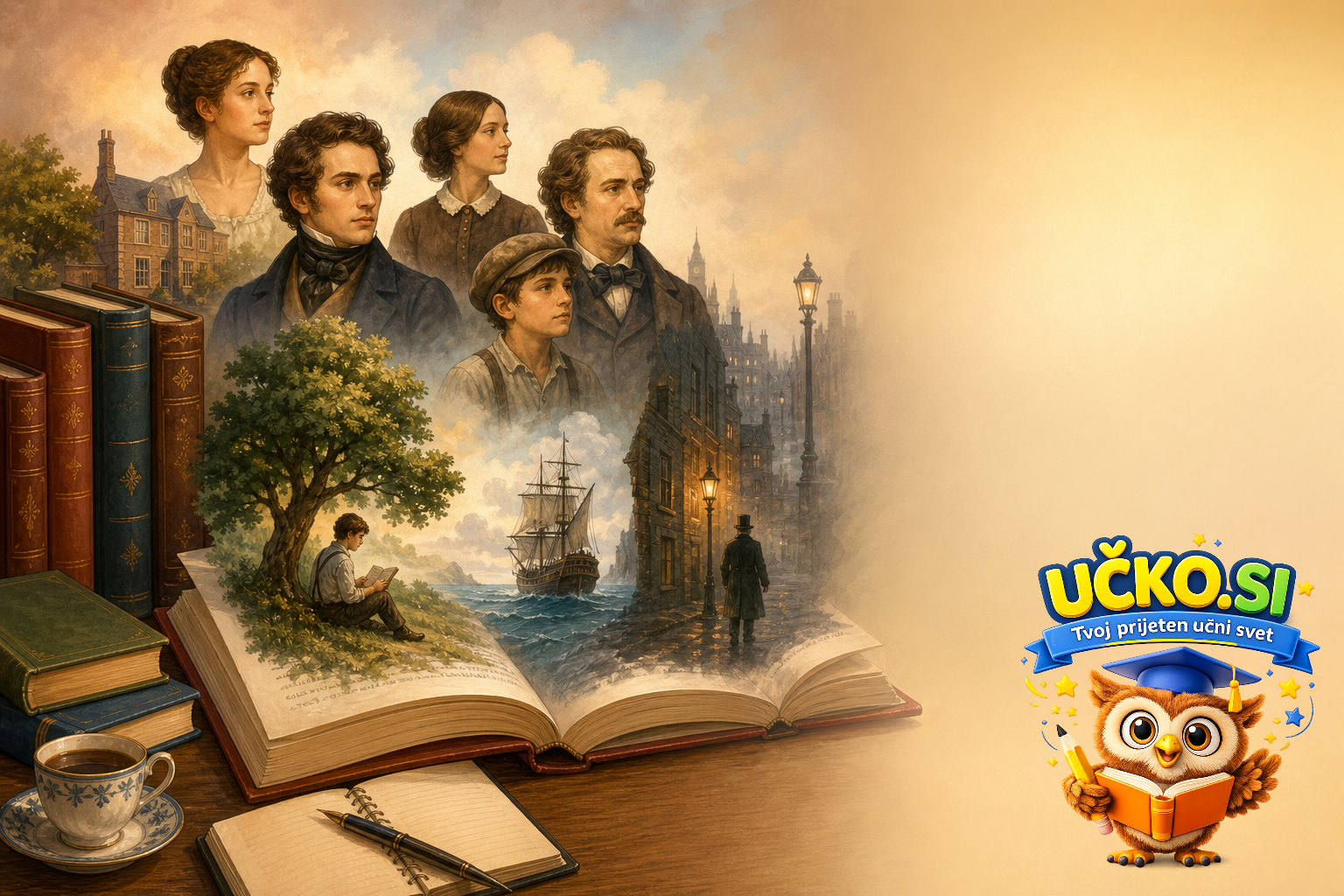
Today, we're exploring short stories and classic literature to help improve your English reading and understanding. These types of stories are great for learning about different worlds and ideas. They also help you practice important grammar.
Ključni pojmi
- Short Story
- A piece of prose fiction, shorter than a novel, focusing on a single event.
- Characters
- The people or animals in the story.
- Plot
- The sequence of events in the story.
- Classic Literature
- Books of high quality that have stood the test of time.
- Past Simple
- Used for completed actions in the past.
What are Short Stories?
A short story is a piece of fiction, usually shorter than a novel. It focuses on one event or a few events and can be read quickly. Short stories often have fewer characters and a simpler plot.
- Shorter than a novel.
- Focuses on a single event.
- Can be read in one sitting.
Elements of a Short Story
Short stories have key parts like characters, setting, and plot. The plot includes an introduction, rising action, climax, falling action, and resolution. There is also a conflict, which is the main problem, and a theme, which is the story's main message.
- Characters: people/animals in the story.
- Setting: where and when the story takes place.
- Plot: sequence of events (introduction, climax, resolution).
Classic Literature and Its Benefits
Classic literature includes books that are high quality and have been important for a long time. They give us insights into human nature and society, even if they are old. Reading classics helps improve vocabulary and critical thinking.
- Books that have stood the test of time.
- Offer insights into human nature.
- Improve vocabulary and critical thinking.
Grammar Focus: Past Simple and Past Continuous
Many stories use the past tense to describe events. The Past Simple is for completed actions, like 'The hero fought the dragon.' The Past Continuous is for actions that were ongoing, like 'While he was reading, the phone rang.'
- Past Simple: for completed actions.
- Past Continuous: for ongoing actions in the past.
- Example: 'was sleeping' (Past Continuous), 'woke up' (Past Simple).
Zanimivosti
- Short stories usually have fewer characters than novels.
- Classic literature helps you understand different cultures and times.
- A common theme in many stories is the importance of friendship.
Povzetek
Short stories and classic literature are excellent for improving your English reading skills. You'll learn about story elements and practice important grammar like the Past Simple and Past Continuous. Enjoy exploring new worlds through these stories!
Pogosta vprašanja
Kaj se naučimo pri temi short stories and classic literature?
Today, we're exploring short stories and classic literature to help improve your English reading and understanding. These types of stories are great for learning about different worlds and ideas. They also help you practice important grammar.
Kaj je short story?
A piece of prose fiction, shorter than a novel, focusing on a single event.
Kaj je characters?
The people or animals in the story.
Kaj je plot?
The sequence of events in the story.
Kako na kratko povzamemo temo short stories and classic literature?
Short stories and classic literature are excellent for improving your English reading skills. You'll learn about story elements and practice important grammar like the Past Simple and Past Continuous. Enjoy exploring new worlds through these stories!
Kje najdem vaje in vprašanja za temo short stories and classic literature?
Za temo short stories and classic literature (Angleščina, 8. razred) so v aplikaciji Učko.si kviz z vprašanji in odgovori ter vaje za preverjanje znanja.
Sorodne razlage – Angleščina, 8. razred
- stories and past experiences
- summarising and retelling content
- summer activities and camps
- tourism and exploring new places
- travel and different lifestyles
- understanding information and instructions
- understanding prices and value
- unexpected events in the past
- word formation and language patterns
- writing and expressing ideas
- advertising and its influence on people
- applying knowledge in practice