cultural texts and traditions
Angleščina · 8. razred
Today we explore 'Cultural Texts and Traditions'. This topic helps us understand how different groups share their stories, beliefs, and ways of life. It's like peeking into the heart of a culture!
Ključni pojmi
- Cultural Texts
- Anything that tells us about a culture.
- Traditions
- Practices, beliefs, or customs passed down through generations.
- Present Simple
- Grammar tense for actions that happen regularly or are generally true.
- Identity
- What makes a group of people unique.
What are Cultural Texts?
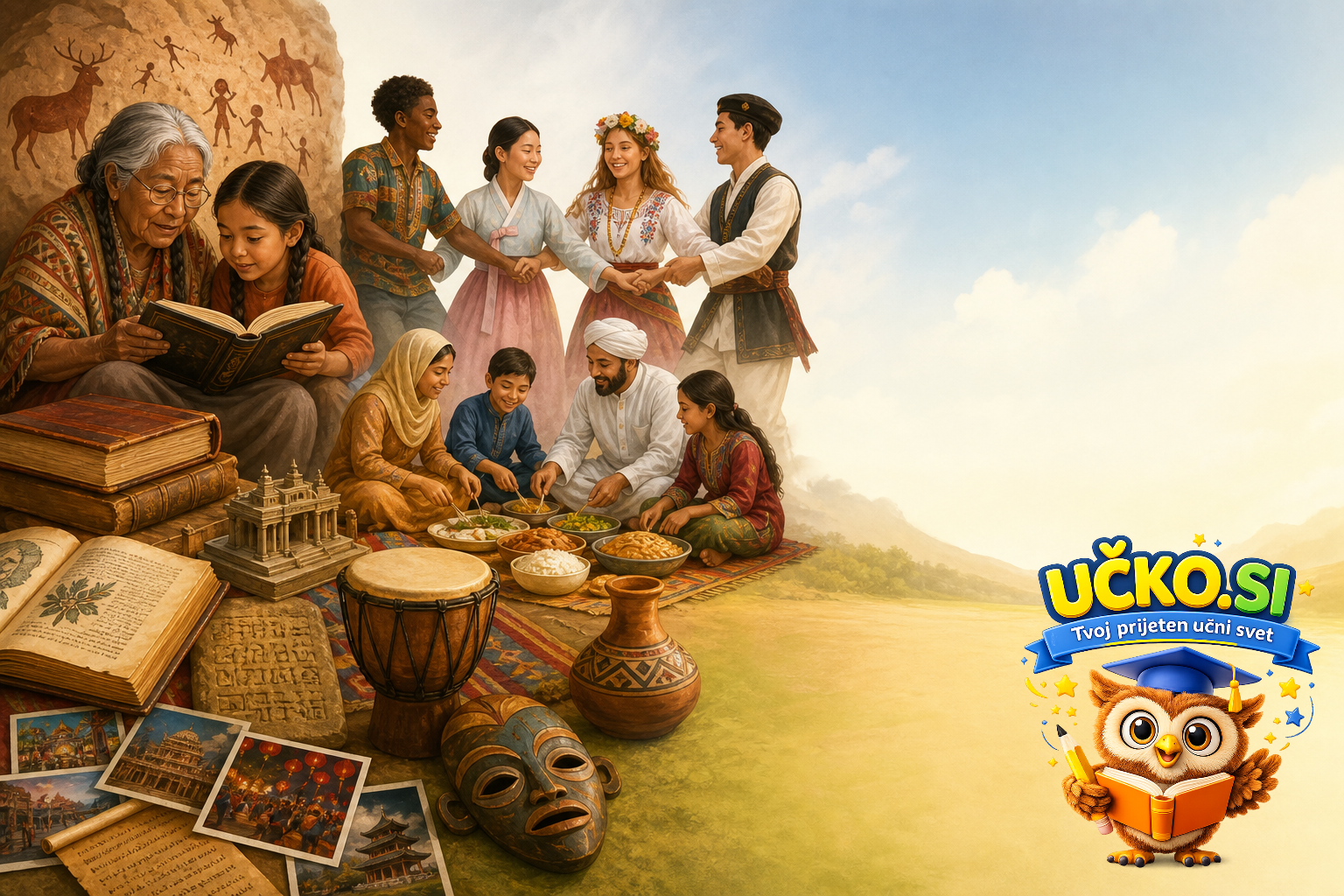
Cultural texts are not just books, but anything that tells us about a culture. They are messages from a group of people. Examples include stories, myths, songs, poems, art, recipes, films, and TV shows. These texts show us how people live, what they value, and their history.
- Cultural texts are anything that tells us about a culture.
- They include stories, songs, art, and even recipes.
- Modern cultural texts can be films and TV shows.
What are Traditions?
Traditions are practices, beliefs, or customs passed down through generations. They are things people do regularly, often at special times. Examples include holidays, festivals, ceremonies like weddings, everyday customs, and folk dances. These activities often tell stories or celebrate events.
- Traditions are customs passed down through generations.
- They include holidays, ceremonies, and folk dances.
- Traditions are often done regularly or at special times.
Why are They Important?
Cultural texts and traditions help us understand a group's history, values, beliefs, and identity. They show us where people come from and what is important to them. Understanding these helps us connect with people globally and appreciate their unique stories.
- They help us understand history, values, and beliefs.
- They show what makes a group unique.
- Understanding them connects us with people worldwide.
Grammar Focus: Present Simple for Traditions
We often use the Present Simple tense when talking about traditions because they happen regularly or are generally true. The rule is: Subject + Verb (base form or +s/es for he/she/it). For example, 'Slovenians celebrate national holidays' or 'She bakes potica for Christmas.'
- Use Present Simple for regular or generally true actions.
- Rule: Subject + Verb (base form or +s/es).
- Example: 'Slovenians celebrate' or 'She bakes'.
Zanimivosti
- The story of Martin Krpan is a famous Slovenian cultural text.
- A recipe for 'potica' is a delicious cultural text from Slovenia.
- Celebrating 'Pust' with masks is a Slovenian tradition.
Povzetek
Cultural texts and traditions are vital for understanding different cultures. They reveal a group's history, values, beliefs, and identity. Using the Present Simple tense helps describe these regular practices.
Pogosta vprašanja
Kaj se naučimo pri temi cultural texts and traditions?
Today we explore 'Cultural Texts and Traditions'. This topic helps us understand how different groups share their stories, beliefs, and ways of life. It's like peeking into the heart of a culture!
Kaj je cultural texts?
Anything that tells us about a culture.
Kaj je traditions?
Practices, beliefs, or customs passed down through generations.
Kaj je present simple?
Grammar tense for actions that happen regularly or are generally true.
Kako na kratko povzamemo temo cultural texts and traditions?
Cultural texts and traditions are vital for understanding different cultures. They reveal a group's history, values, beliefs, and identity. Using the Present Simple tense helps describe these regular practices.
Kje najdem vaje in vprašanja za temo cultural texts and traditions?
Za temo cultural texts and traditions (Angleščina, 8. razred) so v aplikaciji Učko.si kviz z vprašanji in odgovori ter vaje za preverjanje znanja.
Sorodne razlage – Angleščina, 8. razred
- daily tasks and routines
- describing processes and situations
- developing communication skills
- dreams, relationships and personal goals
- environmental awareness and community actions
- everyday shopping and consumer choices
- family life and hobbies
- fashion and personal expression
- food and restaurant situations
- formal and informal communication
- friendships and social relationships
- giving opinions and arguments